
Obesity is currently the most widespread chronic disease. It affects 41% of the adult population in the United States, with a continuous increase observed over the past twenty years, as highlighted in a study published in the journal Circulation (Minhas et al., 2026).
It is discussed everywhere, whether in the media, on social networks, or at the doctor's office. However, between simplistic instructions like "just eat less" and promises of miracle solutions, people forget to explain the biological reality of this condition. Above all, society forgets to reassure those who are affected.
1. What Is Obesity from a Scientific Perspective?
Obesity is not simply a matter of having extra weight. From a medical standpoint, it is defined as an excessive accumulation of body fat that poses a risk to health. It is generally measured using the body mass index (BMI), although this tool has its limitations.
For a long time, adipose tissue was considered merely a passive energy reservoir. Research today shows that it is an active endocrine organ. It secretes hormones, communicates directly with the brain, and influences inflammation, appetite, and metabolism.
The cellular mechanisms of fat storage
At the cellular level, excess fat mass relies on two distinct processes. The first is hyperplasia, which refers to the multiplication of the number of fat cells and occurs primarily during childhood. The second is hypertrophy, which refers to the increase in the size of fat cells and constitutes the predominant mechanism in adults.
What recent scientific discoveries reveal
A study led by Professor Dominique Langin's team at Inserm and the University of Toulouse, published in Cell Metabolism (Dufau et al., 2025), revealed an unexpected function of a protein. Hormone-sensitive lipase (HSL) does not merely serve to release fats. It also acts within the cell nucleus to preserve the structure of adipose tissue. In individuals living with obesity, this internal mechanism is disrupted.
Other research published in Nature Communications (Serdan et al., 2026) sheds light on brown fat. The SLIT3 protein promotes the vascular and neural development of this specific tissue. Unlike white fat, which stores calories, brown fat burns energy as heat and improves insulin sensitivity.
2. Obesity Symptoms That Should Serve as Warning Signs
Obesity cannot be evaluated solely on the scale. Several functional and metabolic signs should prompt vigilance:
- Disproportionate shortness of breath during mild exertion
- Chronic fatigue and unrefreshing sleep
- Joint pain, particularly in the knees and lower back.
- Excessive sweating and skin fold irritation
- Sleep disorders such as heavy snoring or sleep apnea
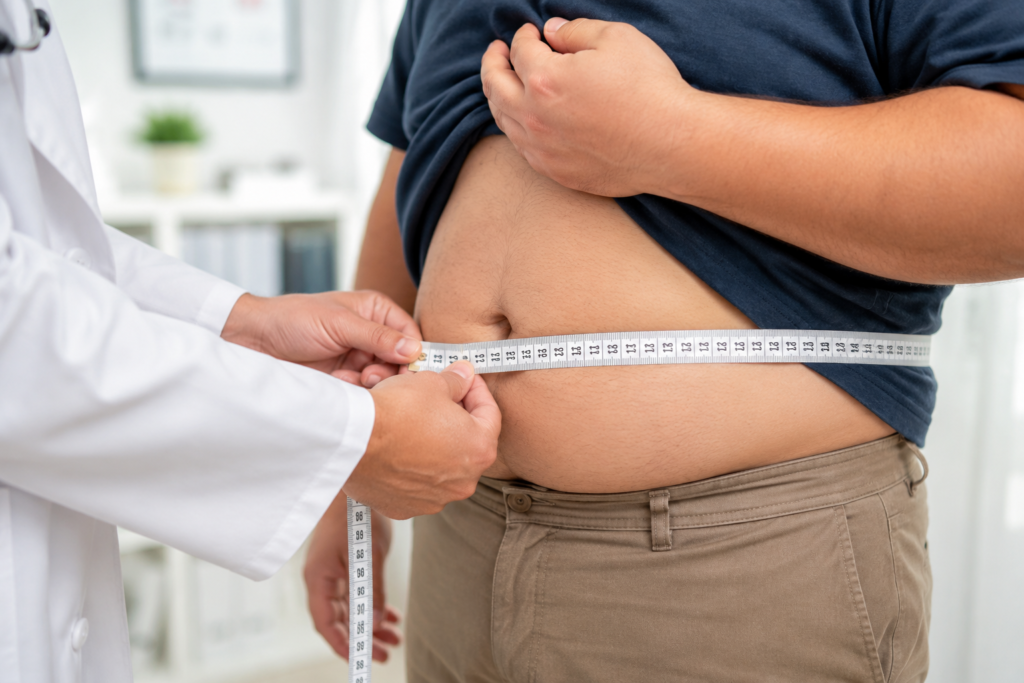
- Elevated waist circumference, which is a key indicator of metabolic risk
- Brain fog and mood swings
If you notice several of these signs, it is a biological signal sent by your body, not a lack of willpower.
3. When to Consult a Doctor or Specialist?
Medical support from a primary care physician, an endocrinologist, or a clinical nutritionist is essential in several situations:
- In the event of rapid and unexplained weight gain accompanied by other symptoms.
- In the event of a marked decline in mobility, sleep, or mental health.
- In the presence of suspected or confirmed complications such as high blood pressure, prediabetes, or sleep apnea.
- Prior to making drastic nutritional changes or resuming intense physical activity.
4. What Are the Real Causes of Obesity?
Obesity results from a complex interaction between biology, the environment, and medical treatments.
Genetic factors and hormonal imbalances
Genetic predispositions can accelerate fat storage. Hormonally, many patients develop leptin resistance. In this situation, the satiety hormone is present in the body, but the brain no longer registers its signal, leading to a constant feeling of hunger.
Medication-induced weight gain and underlying conditions
Certain endocrinological conditions cause secondary obesity, but the use of medical treatments is also a frequent factor.
This is a situation I went through myself: during prolonged courses of cortisone (cortisol), my body reacted strongly and I gained weight very quickly. Other medications, such as certain antidepressants, beta-blockers, or lithium, also significantly alter metabolism.
Psycho-emotional and environmental factors
Chronic stress, isolation, trauma, or socioeconomic instability directly influence metabolic health. These factors encourage the consumption of ultra-processed foods—which are highly palatable and comforting—while restricting access to a balanced lifestyle.
5. How to Support Your Body Naturally: A Holistic Approach
Current scientific evidence requires moving away from blame and focusing instead on targeted physiological actions:
- Reduce the intake of ultra-processed foods in favor of nutrient-dense, fiber-rich foods.
- Nourish the gut flora to regulate systemic inflammation.
- Integrate stress management practices to limit the impact of cortisol on abdominal fat storage.
- Maintain a stable sleep schedule to balance appetite-regulating hormones.
- Promote brown fat thermogenesis through moderate cold exposure and regular, tailored physical activity.
Obesity is a complex, multifactorial pathology. To manage it effectively in the long term, natural approaches and lifestyle changes serve as essential pillars alongside appropriate medical care.
Keep in mind that you are not responsible for a complex biological imbalance. Move at your own pace and be kind to yourself: the body naturally moves toward balance once given the right tools.
Scientific Sources
- Minhas, A. S., et al. (2026). Trends in Obesity Among US Adults and Youths. Circulation, American Heart Association.
- Dufau, J., Recazens, E., et al. (2025). Nuclear hormone-sensitive lipase regulates adipose tissue mass and adipocyte metabolism. Cell Metabolism, 37(11), 2250.
- Serdan, T. D. A., Cervantes, H., et al. (2026). SLIT3 fragments orchestrate neurovascular expansion and thermogenesis in brown adipose tissue. Nature Communications.
August 3, 2026
Sarah Martinez
Related articles