
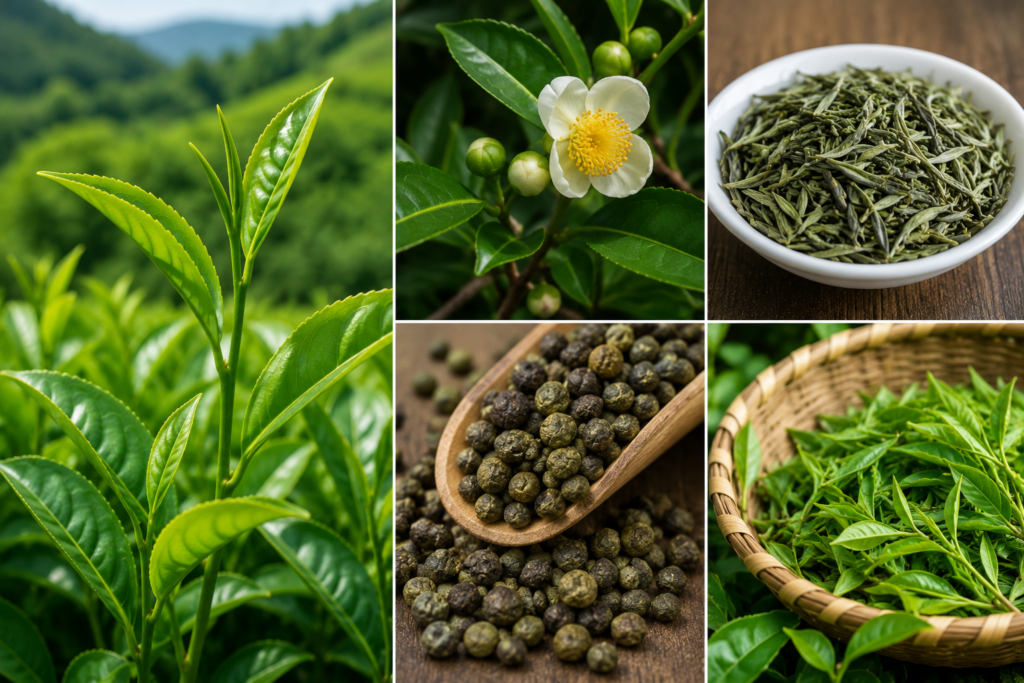

Green tea (Camellia sinensis) has become one of the most widely discussed health and wellness topics across both Europe and the Americas. It inspires universal fascination, elevated to the status of a true vitality elixir by a wave of content highlighting its ancestral virtues and longevity benefits, as confirmed by a comprehensive scientific review on its polyphenols (Hursel et al., Clinical Nutrition Research, 2025).
It is talked about everywhere. Yet between exaggerated marketing promises and common misconceptions, we often forget to explain what actually happens at the biological and cellular level—and above all, we forget to reassure those looking for answers. That is precisely what we will explore here, by delving into the deep mechanisms of this extraordinary plant.
1. Understanding Green Tea: What Is It From a Scientific Perspective?
Green tea is more than just a comforting beverage. From a medical and botanical standpoint, it sets itself apart from other teas through its lack of fermentation, which preserves the full spectrum of its active ingredients—particularly catechins (the most potent being epigallocatechin gallate, or EGCG) and L-theanine.
But the real scientific question is: why does this plant exert such profound effects on our physiology, and how does it interact with our cells? For a long time, its benefits were thought to be limited to a simple surface-level antioxidant effect. We now know that is false: green tea compounds act synergistically to modulate multiple metabolic pathways, stimulate cellular energy expenditure, and positively interact with the gut microbiota.
The Deep Mechanisms of Its Action
At the cellular level, green tea’s benefits rely on biochemical pathways of remarkable precision:
- Inhibition of catechol-O-methyltransferase (COMT): By blocking this enzyme, catechins prolong the action of norepinephrine in the body, which maintains the activation of the sympathetic nervous system.
- Activation of thermogenesis: Cells increase their heat production, thereby burning more calories at rest.
Recent Scientific Discoveries
A landmark study published in Molecular Nutrition & Food Research highlighted EGCG’s ability to modulate oxidative stress at the cellular membrane level, thereby protecting tissues against low-grade systemic inflammation.
Additionally, in-depth research published in Phytomedicine demonstrated that green tea polyphenols act as prebiotics. They promote the proliferation of beneficial gut bacteria, such as Akkermansia, thereby indirectly improving the host’s overall metabolic health.
2. Symptoms and Signs of a Slow Metabolism
An organism with a slowed metabolism or chronic oxidative stress often sends subtle yet persistent signals. Here are the signs to watch out for:
- Chronic fatigue or a feeling of sluggishness after meals
- Difficulty maintaining a stable body composition despite dietary efforts
- A lack of morning energy and difficulty concentrating
- Increased sensitivity to stress and mood swings
- Slower physical recovery after exertion
- Minor skin inflammation or a dull complexion
If you recognize several of these signs, it is not a judgment on your lifestyle, but a warning signal from your body calling for adapted support.
3. When Should You See a Doctor?
It is recommended to consult a healthcare professional (primary care physician, endocrinologist, or nutritionist) in the following situations:
- When fatigue or metabolic difficulties are severe, persistent, and heavily impact daily life
- In the event of rapid and unexplained weight gain or loss, to rule out any hormonal dysfunction such as a thyroid disorder
- If you are considering taking highly concentrated green tea extracts in the form of dietary supplements, especially if you are taking medical treatments (blood thinners, cardiovascular medications) or if you have liver sensitivities
- Before starting a major dietary rebalancing, in order to establish a personalized, comprehensive health assessment
4. Causes of Metabolic Slowdown: A Multifactorial Equation
Difficulty maintaining an active metabolism and a balanced silhouette stems from a complex interplay of factors that go far beyond calorie intake alone.
Genetics and Predispositions
Baseline metabolic rate is partly influenced by genetics, dictating how our body manages energy and stores fat.
Secondary Causes and Treatments
Certain hormonal imbalances or long-term medication use can cause lasting disruptions to energy expenditure. This is an ordeal I have experienced firsthand: during periods of heavy medical treatments, particularly cortisone-based ones, my body suffered severe water retention and deep metabolic disruptions, completely altering my silhouette and energy levels—a stark reminder of just how fragile our body's balance really is.
Lifestyle, Stress, and Sleep
Chronic stress releases cortisol, a hormone that promotes the storage of visceral fat. Lack of sleep, a sedentary lifestyle, and ultra-processed foods also take a heavy toll on our metabolic efficiency.
5. How Does Green Tea Really Help with Weight Loss?
When you drink green tea or take its extracts to support weight loss, a true biochemical choreography takes place inside your body. Here is precisely what happens:
- Triggering Lipolysis: The combination of caffeine and catechins (EGCG) sends a chemical signal to fat cells to release stored fatty acids into the bloodstream so they can be burned.
- Accelerating Thermogenesis: The body activates its tissues, particularly brown adipose tissue, to generate heat. This increases your energy expenditure, even at rest.
- Regulating Blood Sugar: Green tea improves insulin sensitivity, preventing post-meal blood sugar spikes and stopping immediate fat storage triggered by this hormone.
A word of caution, however: green tea is no magic potion. It acts as a powerful cofactor and metabolic enhancer, but it reaches its full potential only when combined with a nutrient-dense diet and regular physical activity.
6. The Essential Message: You Are Not a Failure
Scientific discoveries confirm it: the body possesses remarkable resilience, yet it faces a modern environment that can be hostile and goes far beyond sheer willpower. It is time to stop feeling guilty and embrace a holistic approach that helps your body regain its natural balance:
- Incorporate green tea as a mindful daily ritual, preferably in the morning or before exercise.
- Prioritize whole, nutrient-rich foods to deeply nourish your cells.
- Take care of your sleep and calm your nervous system to lower cortisol levels.
- Take it step by step, with self-compassion, while avoiding drastic diets that drain your metabolism.
Green tea is a gift of nature at the crossroads of biology, tradition, and modern science. To support your health and vitality over the long term, gentle, natural approaches offer powerful tools for well-being.
Above all, keep hope: you are absolutely not alone on this journey, and know that your body possesses extraordinary strength and adaptability. It is capable of resetting itself and finding its proper balance when you learn to work with it, not against it. Take the time to move forward at your own pace, with kindness and self-compassion.
Scientific Sources
-Hursel, R., et al. (2025). Polyphénols et régulation de la santé métabolique. Clinical Nutrition Research.
-Molecular Nutrition & Food ResearchEGCG modulation of oxidative stress and low-grade inflammation.
–PhytomedicineGreen tea polyphenols as prebiotic modulators of Akkermansia as well as metabolic health. Akkermansia as well as metabolic health
August 3, 2026
Sarah Martinez
Related articles