
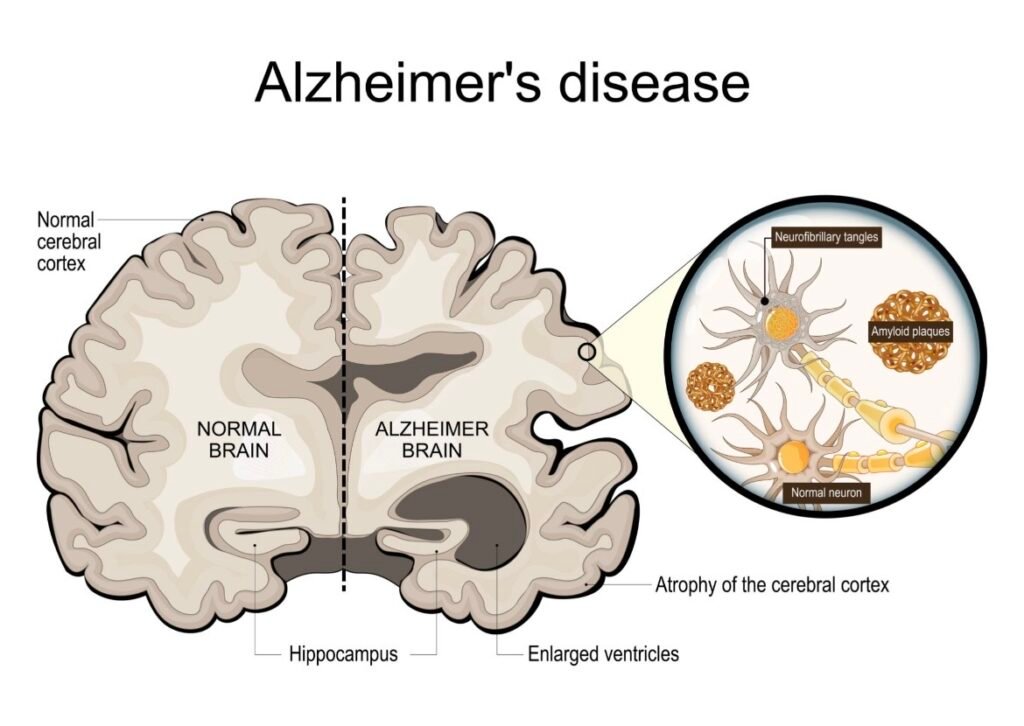

Preserving our memory, mental clarity, and brain vitality spans across eras and continents. While Alzheimer's disease now represents one of the most concerning neurodegenerative conditions worldwide, many people — especially younger generations — want to understand its underlying mechanisms in order to adopt sustainable prevention strategies.
Today, modern research explores this complex condition not only through genetics and cellular biology, but also through the impact of our environment, lifestyle, and the valuable contributions of traditional medicine. Let us explore this comprehensive approach with clarity, empathy, and rigor.
1. Understanding Alzheimer's Disease: What Happens in the Brain?
Alzheimer's disease is not just occasional forgetfulness. It is a progressive process in which communication between neurons breaks down, leading to a gradual decline in cognitive abilities and independence.
The underlying biological mechanisms
- Beta-amyloid plaque accumulation: Abnormal protein fragments build up in the extracellular space between neurons, forming plaques that disrupt nerve signal transmission.
- Neurofibrillary tangles (Tau protein): Inside the neurons themselves, the Tau protein undergoes hyperphosphorylation, breaking down the cellular skeleton and leading to gradual cell death.
- Oxidative stress and neuroinflammation: Chronic inflammatory reactions within brain tissue and the excessive production of free radicals accelerate the premature aging of brain structures.
What Scientific Studies Show
- Glymphatic system dysfunction: Recent neuroscience research highlights the vital role of deep sleep, during which the brain activates a clearance system to flush out metabolic waste, notably the beta-amyloid proteins accumulated throughout the day.
- Genetic and epigenetic vulnerability: The presence of the APOEε4 allele is an identified statistical risk factor, but gene expression remains heavily modulated by our lifestyle (diet, physical activity, stress management).
2. Environmental Factors and Neurotoxicity: The Impact of Heavy Metals
Among the increasingly studied environmental and multifactorial drivers, the accumulation of heavy metals and pollutants in the body plays a major role in disrupting brain homeostasis.
Direct neurotoxicity of heavy metals
- Crossing the blood-brain barrier: Certain toxic metals or metals in poorly regulated ionic forms (such as lead, mercury, aluminum, or cadmium) are capable of crossing the brain's protective barrier.
- Induction of major oxidative stress: Once accumulated in nervous tissue, these metals catalyze the formation of free radicals and disrupt energy production in the mitochondria (the powerhouses of the cells).
- Interactions with pathogenic proteins: Mechanistic studies demonstrate that the presence of heavy metals promotes the early aggregation of beta-amyloid plaques and the precipitation of Tau proteins.
Lifestyle and daily aggravating factors
- Pro-inflammatory diet and sedentary lifestyle: Excess refined sugars, ultra-processed products, and a lack of physical activity promote insulin resistance and systemic inflammation — two factors strongly correlated with cognitive decline.
- Neglected environmental exposures: Frequent consumption of large predatory fish loaded with methylmercury, poorly filtered drinking water, or regular use of degraded aluminum cookware represent sources of continuous exposure that should be reduced.
3. When Should You Consult a Doctor?
Cognitive health assessments must always be conducted under the supervision of qualified healthcare professionals (attending physician, neurologist, or geriatrician). A medical consultation is essential in the following situations:
- If you or a loved one notice repeated memory loss impacting daily life, disorientation in time, or sudden language and reasoning difficulties.
- If you have a family history of early-onset Alzheimer's disease and wish to establish a preventive health checkup.
- If you are considering a course of supplements, herbal medicine, or a detoxification program, in order to avoid any harmful drug interactions.
4. Approaches to prevention and neuroprotective herbal medicine
As part of a holistic approach, certain medical traditions around the world offer plant-based resources recognized for their antioxidant and neuroprotective properties:
- Turmeric (Curcuma longa) – Ayurveda) : Its active compound, curcumin, is the subject of extensive clinical research for its potent antioxidant potential, its ability to cross the blood-brain barrier, and its role in modulating neuroinflammation.
- Ginseng (Panax ginseng – Traditional Asian Medicine) : Used for millennia to tone vital energy (Qi), this adaptogenic plant supports the body's resistance to stress and promotes mental sharpness.
- Ginkgo Biloba: Renowned in Western and Asian herbal medicine for stimulating cerebral blood microcirculation, promoting the oxygenation of nervous tissue, and protecting neurons against oxidative stress.
5. The Essential Message: You Are Not Powerless
Preserving our cognitive capital unfolds over time, through consistency and respect for the body's natural rhythm. It is not about giving in to fear, but about adopting simple, protective daily habits:
- Combine intellectual and social stimulation with restorative sleep to allow the brain to clear its metabolic waste.
- Incorporate a Mediterranean-style diet rich in healthy fats (omega-3s), antioxidants, and whole foods.
- Gradually reduce exposure to environmental toxins and support your body with care and discernment.
Practical Guides: Réflexes quotidiens pour protéger son capital cognitif
- Optimizing Sleep Quality: Maintain regular sleep schedules and avoid screens in the evening to promote the deep sleep phases necessary for cerebral glymphatic clearance.
- Engage in gentle, regular physical activity: 30 minutes of daily walking stimulate cerebral blood flow and promote the secretion of neurotrophic factors (BDNF).
- Consume antioxidants daily: Incorporate berries, green tea, spices such as turmeric, and leafy green vegetables to fight oxidative stress.
- Stimulating Brain Plasticity: Learn a new language, play an instrument, read, or practice meditation to strengthen cognitive reserve.
Scientific Sources
- Selkoe, D. J., & Hardy, J. 2016 The amyloid hypothesis of Alzheimer’s disease at 25 years. EMBO Molecular Medicine, 8(6), 595–608.
- Fifi, A. C., et al. 2022. Exposure of metal toxicity in Alzheimer’s disease: An extensive review. Frontiers in Pharmacology, 13, 903099
- Rahman, M. A., et al. 2025. Associations of Environmental Exposure to Arsenic, Manganese, Lead, and Cadmium with Alzheimer’s Disease: A Review of Recent Evidence from Mechanistic Studies. MDPI Brain Sciences / Environmental Health, 15(2), 47
- Small, G. W., et al. 2018 Memory and Brain Amyloid and Tau Effects of a Bioavailable Form of Curcumin in Non-Demented Adults: A Double-Blind, Placebo-Controlled 18-Month Study. The American Journal of Geriatric Psychiatry, 26(3), 266–277.
- Hashiguchi, M., et al. 2015 Meta-analysis of the efficacy and safety of Ginkgo biloba extract for the treatment of dementia. Journal of Pharmaceutical Health Care and Sciences, 1(1), 14.
August 10, 2026
Sarah Martinez
Related articles