
My journey from daily crises to freedom
A disease that can strike at any age
We often think that asthma is a childhood disease, or that it is necessarily passed down from parents to children. The reality is quite different. Many people develop it in adulthood, without warning, sometimes with no family history at all. That is exactly what happened to me: a simple allergy that, after thirty years, turned into asthma.
Asthma is a chronic respiratory disease. While it is true that it does not go away, we can learn to understand it, to tame it, and to regain a normal life. In this article, I invite you to understand what happens in the body, to discover the classic life-saving treatments, and to explore together the natural approaches that can help, always as a supplement and without ever taking any risks.
Part 1: What happens in the lungs during an asthma attack?
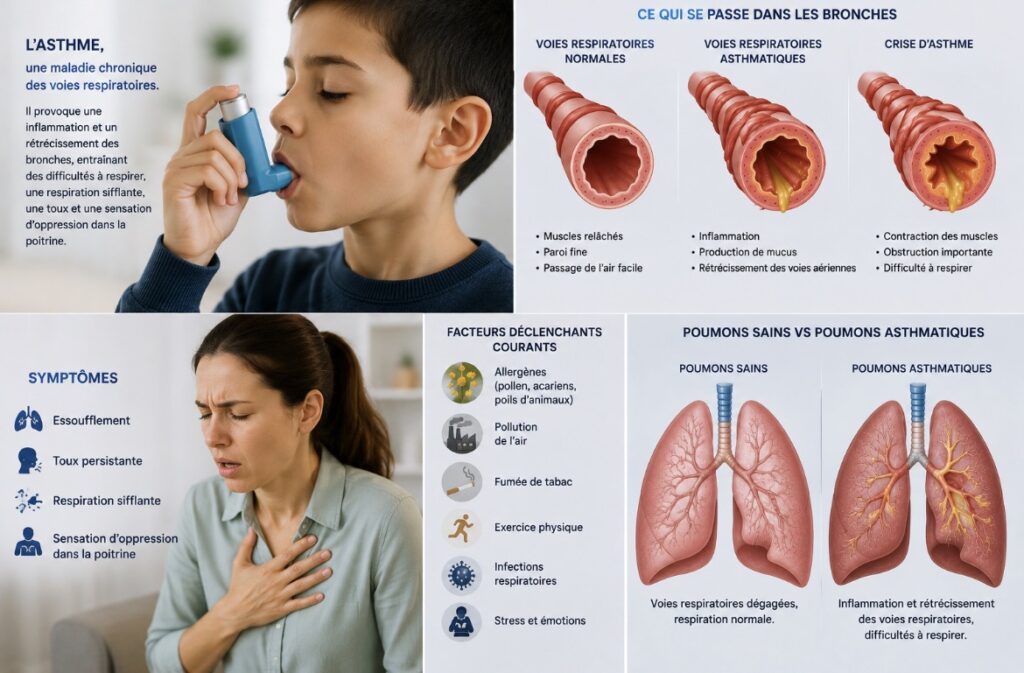
During an attack, it is not just a matter of "breathing less easily." Three phenomena occur simultaneously in the bronchial tubes:
- A spasm the muscles surrounding the bronchial tubes contract suddenly. The airway narrows abruptly.
- An inflammation the lining of the bronchial tubes swells, thickens, and becomes congested.
- Excessive mucus production: the bronchial tubes produce a thick, sticky mucus that further obstructs the airways.
This combination is what creates that distressing feeling of suffocation, accompanied by the famous "wheezing" in the chest, a cough that often occurs at night, and a feeling of chest tightness.
Part 2: Why does asthma appear? Risk factors and triggers It is crucial to distinguish between factors that predispose someone to developing asthma and the "triggers" that cause an attack.
Risk factors
- Family history Having an asthmatic parent unfortunately increases the risk.
- Allergic predisposition people who suffer from eczema or allergic rhinitis are more vulnerable.
- Smoking whether active or passive, it significantly weakens the lungs.
However, asthma can also strike without warning, at any age, even without any of these factors. That is my case.
The most common triggers
- Allergens pollen, dust mites, mold, and pet dander.
- Respiratory infections Respiratory infections: a simple cold, the flu, or sinusitis can trigger an attack.
- Physical exertion: it should not be avoided, as it can be managed.
- Weather changes : cold air, sudden temperature variations.
- Irritants : tobacco smoke, strong perfumes, household cleaning products, and pollution.
- Strong emotions : intense laughter, crying, or significant stress.
- Certain medications.
Part 3: Classic treatments – Indispensable allies
Conventional medicine offers two main categories of medication:
- Bronchodilators (such as Ventoline)
They act quickly by relaxing the bronchial muscles. They are essential in the event of an attack and must always be kept within reach.
I always keep my Ventolin in my bag, everywhere I go. It is a safety net; I do not take any chances.
- Anti-inflammatory drugs (inhaled corticosteroids)
They work over time by reducing bronchial inflammation. They are taken daily, even when you feel well, to prevent attacks.
Possible side effects
Some treatments can lead to weight gain, discomfort in the lungs, or other effects. It is important to discuss this with your doctor to adjust the treatment.
At first, I was taking the medication almost every day. I gained a lot of weight; I went from a size XS to a 44. It wasn't me anymore. I looked for other solutions so I wouldn't have to rely solely on medication.
Part 4: The natural approach – Allies for relief and prevention
Many plants, vitamins, and foods can help reduce inflammation, relax the bronchi, and thin mucus. They do not replace treatment, but they can support it effectively.
🌿 The most effective medicinal plants
| Plant | Properties | Usage |
|---|---|---|
| Oregano | Powerful anti-inflammatory, pulmonary purifier | In infusion or essential oil |
| Licorice | Anti-inflammatory, immunostimulant | In decoction (caution in case of hypertension) |
| Ginger | Relaxes the bronchi, improves breathing | In infusion, fresh or dried |
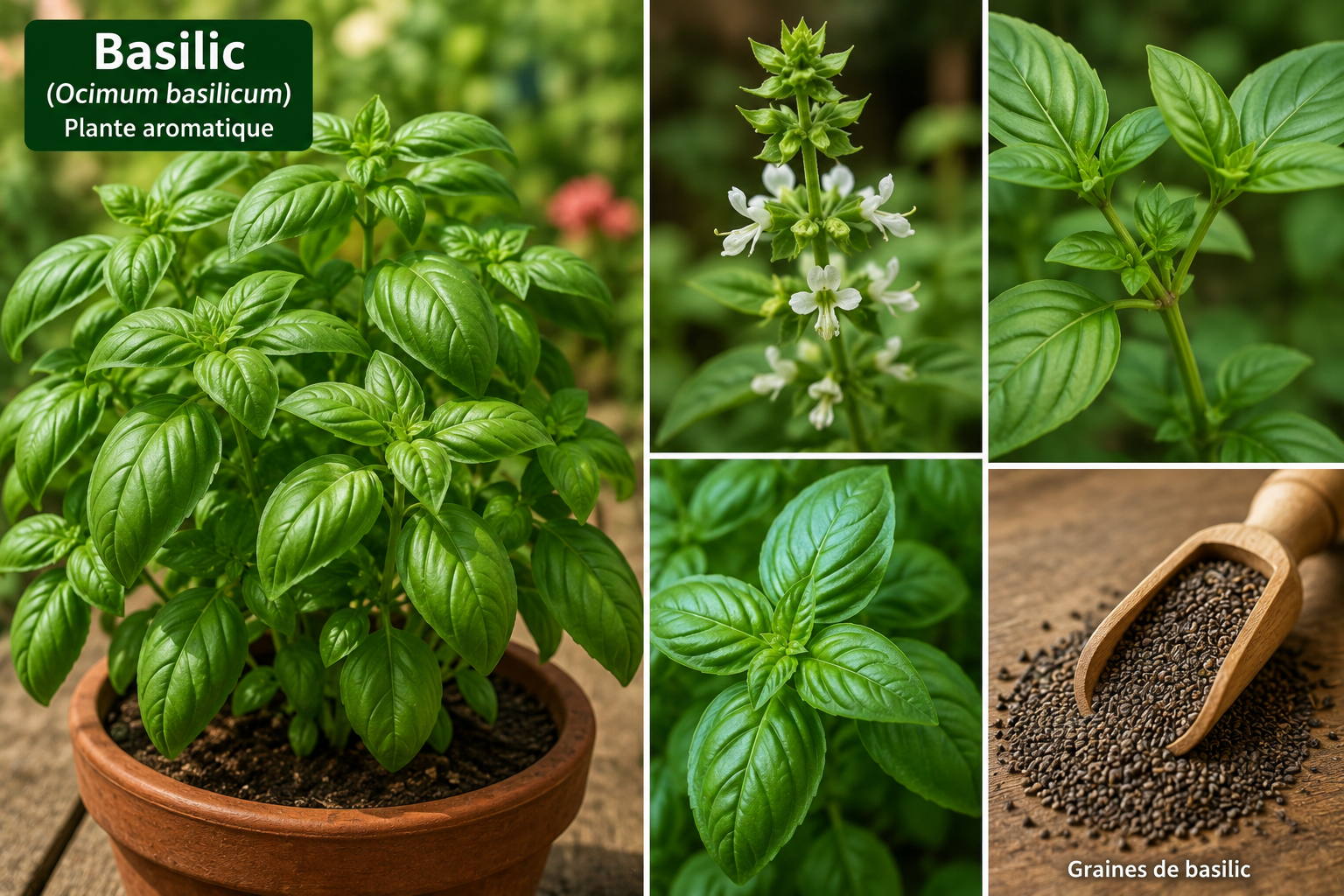
| Basil | Natural expectorant, eliminates mucus | In infusion or in food |
| Chamomile | Anti-inflammatory, soothes chest inflammation | In gentle infusion |
| Peppermint: | Anti-allergic and decongestant. | In infusion (to be avoided in case of reflux) |
| Hibiscus | Improves respiratory health | In cold or hot infusion |
| Marshmallow | Soothes the respiratory tract, traditional | In infusion |
Essential vitamins and nutrients
| Vitamin / Nutrient | Role | Sources |
|---|---|---|
| Vitamin C | Powerful antioxidant, reduces the risk of asthma | Citrus fruits, kiwi, bell peppers, broccoli |
| Magnesium | Helps relax bronchial muscles | Almonds, leafy greens, cocoa |
| Vitamin D | Modulates inflammation and immunity | Sun, oily fish, eggs |
| Omega-3 | Natural anti-inflammatory | Oily fish, flaxseeds, walnuts |
🍵 Examples of beneficial herbal teas
- Ginger + mint infusion to relax the bronchi and clear the airways.
- Licorice + chamomile infusion : anti-inflammatory and soothing.
- Oregano + thyme infusion : purifying and protective.
Part 5: The importance of prevention – The ritual before pollen season
For people whose asthma is triggered by pollen in the spring, preparation in advance can really make a difference.
Before February, I prepare my ritual. I make herbal teas and soups, and I boost my diet with plants and antioxidants. The year I didn't do it, I had to use Ventolin several times. Usually, I can go almost the whole season without an attack.
Tips for the high-risk period:
- Start one to two months before during the pollen season, to boost your diet with antioxidants (vitamin C, green vegetables, fruits).
- Regularly drink anti-inflammatory herbal infusions (chamomile, ginger, liquorice).
- Avoid pro-inflammatory foods (refined sugars, and for some, dairy products).
- Maintain a good hydration to thin the mucus.
Part 6: The Essential Message – Responsibility and Balance
Key takeaway:
- Always keep your rescue treatment with you.
- Do not stop a maintenance treatment abruptly without medical advice.
- Use plants and supplements as a supplement, not as a replacement.
- Listen to your body: if an attack happens, use your bronchodilator.
Toward a Freer Life, Even with Asthma
Asthma can be a restrictive disease, but it is possible to reduce its impact on daily life. By understanding the mechanisms of the disease, relying rigorously on medical treatments, and integrating adapted natural approaches, it is possible to space out attacks, regain a better quality of life, and even move from daily attacks to an almost normal life, with only one period of vigilance per year.
The essential thing is to find your own balance : the one that allows you to live without fear, with your medication within reach, but also with natural tools that support you in your daily life.
May 21, 2026
Sarah Mrtinez
Related articles